In our everyday lives we face an unrecognized universal problem that slowly kills our planet: pollution. Our world today is said to produce 57 million tons of plastic pollution every year and unfortunately, that number does not go down, but instead rapidly grows year after year. North Broward has taken on a new initiative by introducing a recycling program designed to promote sustainability on campus.
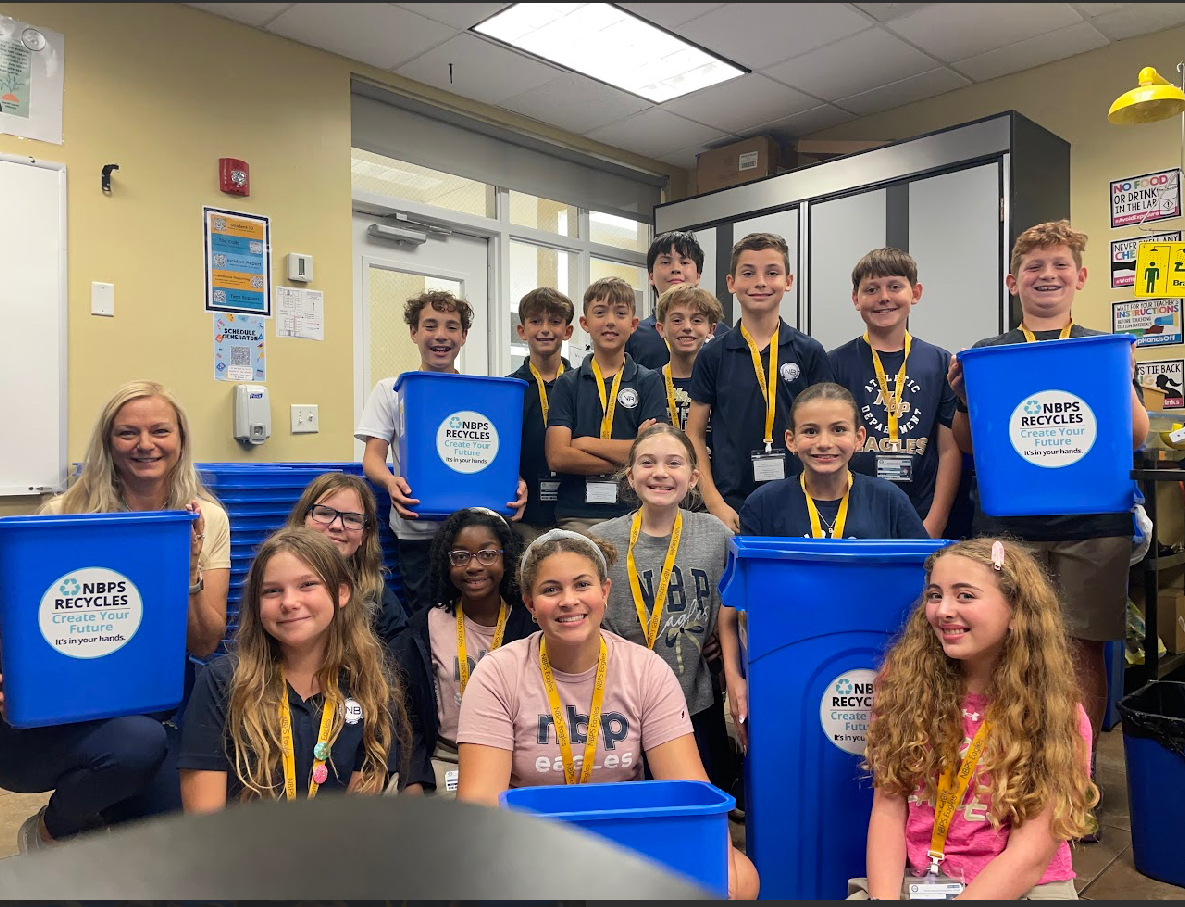
At the center of the program, Mrs. Vester, a 6th grade Earth Science teacher. Mrs. Vester has a mission to promote plastic sustainability, and she starts with North Broward students. The idea of a recycling program comes to Mrs. Vester on her drive to school. On her way, she passes the landfill “Trash Mountain.” She recalls, “I drive by the landfill every day, and I observe it getting bigger and bigger, day by day. I just think, we’re not doing something right, there is something very wrong happening that keeps growing.” After seeing how her local community is impacted by the neglectful way waste is managed, she realizes she needs to take a stand and make the change that contributes to fixing the waste problem.
Understanding the importance of recycling means understanding the importance of its place in wider waste management practices. Recycling is the final R of the 3 R’s system, which consists of Reduce, Reuse, and Recycle. This system indicates that while recycling is important, it’s equally important to reduce, and reuse these materials. North Broward’s recycling program is intended to touch all grade levels (lower, middle, upper) as well as every classroom and learning space. The goal of this program is to allow students to understand and gain knowledge about sustainable growth, and the impact plastic waste has on the environment. Within the next couple of weeks, students can expect to see blue recycling bins in every classroom and are encouraged to make use of them. Mrs. Vester and her team of students want people to understand that even with slight changes in waste management, students make an enormous impact on not only the environment around them, but also the world itself.
However, North Broward’s sustainability projects do not stop at the plastic portion of the recycling program. Food waste is a growing issue globally, and waste occurs from production to consumption. It is estimated that the average person wastes between 217 and 257 pounds of food annually. A new student-led initiative has been set in place that initiates a composting system within the school, creating a natural and sustainable fertilizer. Emma Birnbaum, a senior at North Broward elaborates on this program “After securing a $4,900 grant from the Broward County Youth Climate Action Fund, we create a three bay composting system”. Thanks to the efforts of Emma and her teammates, Julia Sotto Nascimento and Ana Cortina, one hundred percent of the cafeteria’s food scraps are composted, making North Broward the first school in South Florida to do so. Mrs. Vester touches on this, explaining, “Once we saw how much food was thrown out every day in the cafeteria, composting felt like the obvious place to start”. She adds, “Our school’s sustainability goals start with a simple idea: we make a real difference by wasting less. That’s why we begin with food waste and launch our composting program.”
With the help of student participation and a clear mindset, students at North Broward can change the amount of food, and plastic material wasted each year. Because of recycling initiatives already in place, North Broward prevents 140,000 pounds of food waste from entering a land fill and prevents over 100 metric tons of carbon dioxide from entering the atmosphere annually. With an increased participation from each student from all 3 levels of school, North Broward contributes even more to the amount saved instead of wasted: leading to a significantly higher prevented carbon dioxide emissions, making a positive impact on the climate.
Mrs. Vester, as well as the students who work with her to make this program successful, portray a clear message: start small. Mrs. Vester explains that “Even small actions, like bringing your own cup to Starbucks instead of using their plastic cups, can add up.” She says, “I want students to think about sustainability in every choice they make.” She encourages students to look within their own life and see how small changes to their habits can make a big impact on future generations of the world, because when you recycle today you can protect someone’s tomorrow.