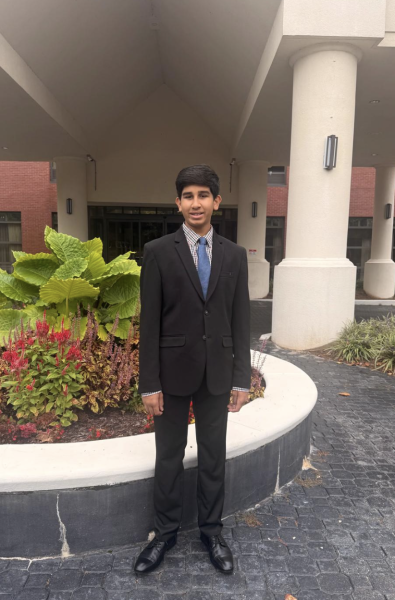
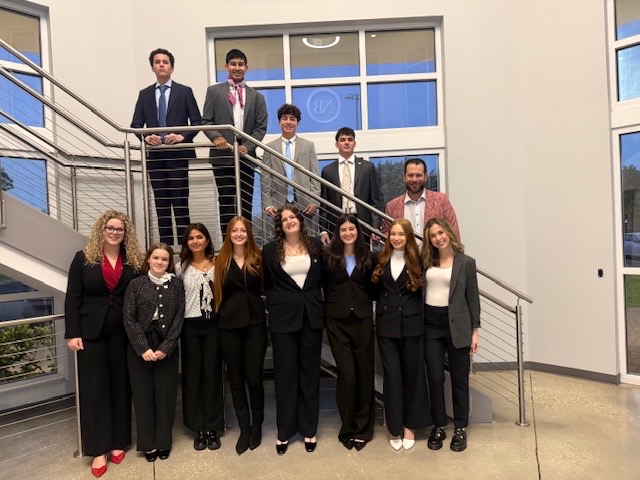
On February 6, the halls of the courthouse are filled with nervous energy as the North Broward Mock Trial team prepares to compete. Dressed in formal attire and carrying binders filled with notes, affidavits, and carefully prepared questions, these students step into a setting that feels far more serious than an ordinary school day. There is a palpable sense of tension, as everyone holds their breath, preparing for the first round to begin. Pages flip as teammates cram in one final review, ready to begin.
Mock Trial is not simply a club; it is a commitment. As one of the two incredible team captains, Caroline Abrams explains, “Honestly, I think what separates a winning team from an average team is how committed its members are.” She emphasizes that while many students are busy with schoolwork and other activities, success depends on how much each person is willing to prioritize the team. “For us, it’s a club, which means it depends entirely on how much people are willing to prioritize it outside of school hours.”
Unlike some schools that offer Mock Trial as a scheduled class, North Broward students practice after school, often for hours at a time. Their preparation begins the moment the case packet is released. Abrams describes the early stages of preparation: “At the very beginning, when we first get the case packet, we usually spend about a week really breaking it down–going through all the facts, understanding each witness, and making lists of good and bad facts for both sides.”
After that, the team divides into smaller groups. Attorneys work closely with their witnesses, building direct and cross-examinations piece by piece. They work together multiple times in a week, often outside of designated team practice days. As competition approaches, the practices grow more intense. The practices become longer and more in-depth. Every word and phrase is analyzed and refined to make sure it is the best possible wording. “Then, once competition gets closer, we do full run-throughs, starting with openings, directs and crosses for both plaintiff and defense, and then closings,” Abramams says. Throughout every practice, the coaches: Mr. Rydell and Mrs. Pesaturo, guide the team. Abrams describes them as “AMAZING coaches… who are both so dedicated and put in so much time pushing us to improve.”
The competition itself requires more than memorization. According to Abrams, “To be a good attorney, you definitely need strong public speaking skills and confidence, but more than that, you need to be able to think on your feet. Things never go exactly as planned.” An unexpected statement from the opposing witness can cause attorneys to need to adapt instantly and change their entire game plan. Witnesses also face their own challenges. “You have to really become your character and know your affidavit inside and out,” she explains. “It is also super important that you are able to stay calm under pressure, especially during cross examinations.”
Competition day brings a different atmosphere than practice. “I think the most fun part is competition day itself!” Caroline shares. “There’s just such a different energy; everyone’s dressed up, nervous but excited, and once the trial starts it all feels so real.” After months of preparation, the team finally sees their work come together. “All the hours of practice finally come together, and it’s such a cool feeling to see everything click.”
Joining the competition team is also a process. At the start of the year, there are meetings inviting students interested in participating to learn more. Those who wish to compete must audition by answering direct-examination questions. “If you really want to join the competition team, you have to show you are super dedicated, coachable, and excited!” Abrams explains.
Beyond the competition, mock trial teaches skills that can be used far beyond the courtroom. Students develop abilities such as critical thinking, communicating coherently, and most importantly, staying calm and composed while under pressure. The experience not only prepares students for a future career in law, but for any form of leadership that calls for these skills to be used. Whether delivering a powerful opening statement or responding calmly to an unexpected objection, each member plays an important role. In the end, Mock Trial is about more than winning. It is about growth, dedication, and the unforgettable experience of stepping into a courtroom and making a case come alive.